

Product Description:
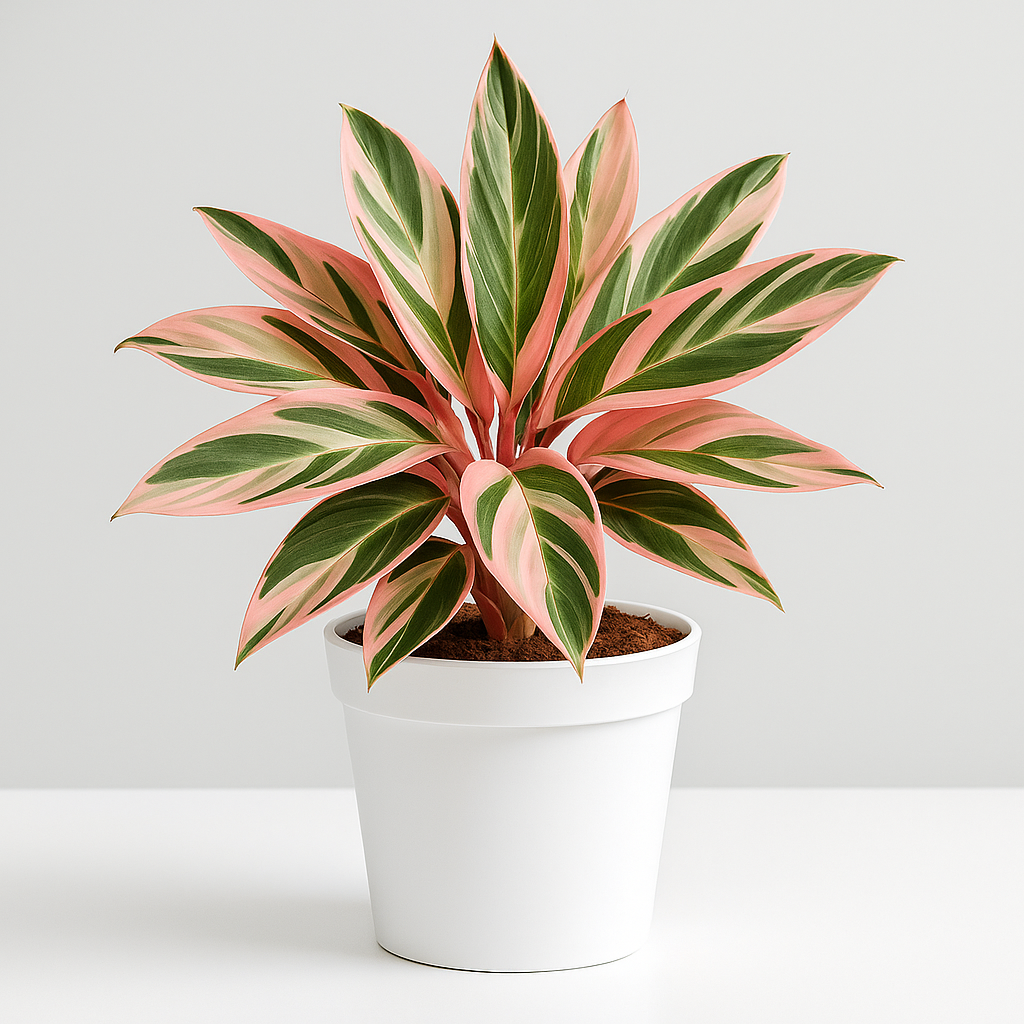
The Stromanthe Triostar is one of those sensational, star-quality plants you fall in love with immediately. Its artistically splashed green-and-white foliage glows with pinkish hues that demand attention—and boy, does it. Stromanthe triostar care can be filled with joy, Stromanthe sanguine gives you a super attractive houseplant that can be used as a gift plant. It can be grown outdoors in hot and humid climates, but it does best well indoors and is more commonly grown as a house plant. A relative of the popular prayer plant, stromanthe houseplants are sometimes thought to be difficult to maintain. Following a few basics of stromanthe plant care allows you to demonstrate your green thumb and keep the attractive specimen growing and thriving year-round.
Light:
Positioning your triostar stromanthe in an area with dappled light will provide it with the best chance of flourishing. If it receives too much direct sun, it can burn the leaves. As a houseplant, dust its leaves so the plant can receive more light.
Soil:
Your triostar needs a soil that is well-draining, breathable, and light. Although it needs to retain moisture, it shouldn’t be too heavy or claggy.
Water:
Keeping the soil constantly moist, but not waterlogged, is preferable. In cooler weather, this plant can be kept a little drier. Allowing just the top inch of soil to dry before re watering usually provides good results.
Temperature and Humidity:
As you would expect with a tropical plant variety, the triostar prefers a humid environment and warm temperatures. It does best in temperatures of around 65 to 80 degrees Fahrenheit. Many people keep their triostars on a bathroom window .That way they get plenty of humidity. They don’t like environments that have harsh, dry heat or air-conditioning.
Fertilizer:
Every 2-3 weeks while actively growing with very dilute, balanced fertilizer. Flush the soil several times per year.
Potting and Repotting:
As common houseplants, triostars do well in containers. You just need to ensure that the pots are deep enough to accommodate the roots, but not so deep that water will sink and become stagnant. Plenty of drainage holes are required to prevent water-logging too. Repotting your plant after a couple of years can help them thrive. Look out for the roots beginning to grow out the bottom of the container. When you see this, it’s probably time to move them. It’s best to do this in the spring.
Propagating Triostar Stromanthe:
While it’s not possible to grow new triostar stromanthe plants from simple cutting, placed in water it’s still possible to get two (or more) plants from one. Triostar stromanthe plants can be propagated by division
Step 1: Remove the mother plant from its pot. Loosen the roots and the soil gently with your fingers, then carefully pull apart the rhizomes to separate them into a few clumps. Make sure each clump includes at least two or three leaves. You can use your shears or a clean, sharp knife to separate any connected roots.
Step 2: Prepare new pots with fresh soil for the new divisions you’ve made. Plant the new divisions in the new pots. Replant the mother plant in a container with fresh soil. Water the plants so that the soil is uniformly moist.
Step 3: Keep the new plants in a warm place with bright, indirect light. Be sure to keep the soil moist but not soggy. When you see new leaves appear, that’s a sign that the roots have established.